Back to Totara Park this morning. It’s been quite hot during the day, so an early morning walk is very pleasant. Especially when the sun is just coming up. There’s a lovely warm glow from the rising sun. Very special.
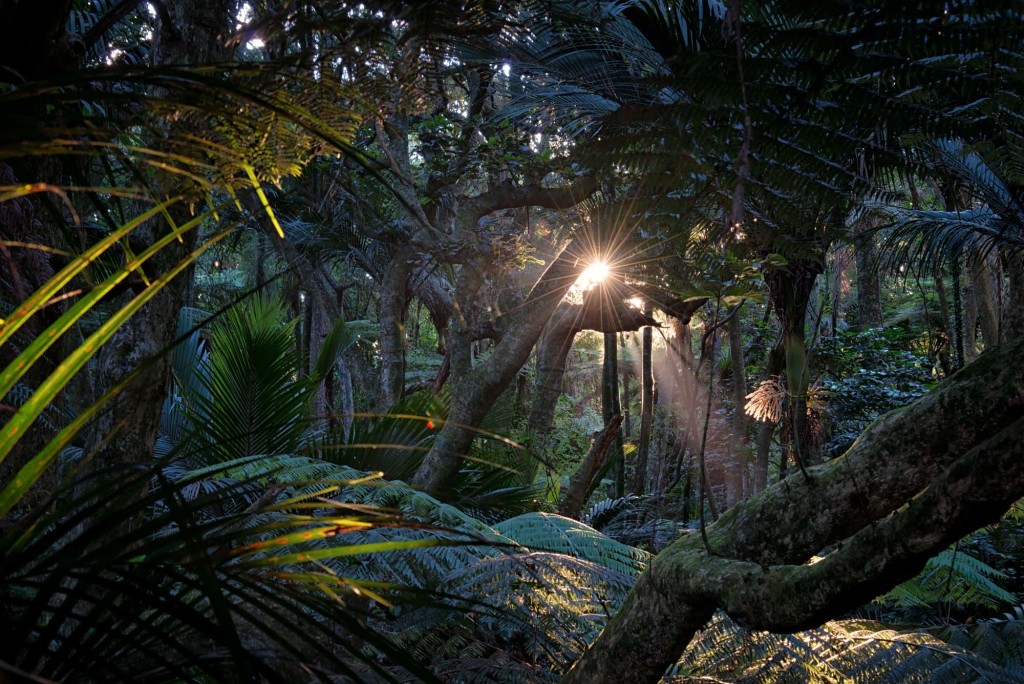
The first shot in this post has a significant sunburst effect in the image. I can recall years ago using sunburst filters to get starburst effects from highlights in the image. No filter used in this shot. The lens seems to do a nice job all by itself!
Rimu in Totara Park
I’ve always had a special fondness for Rimu trees. I can recall a friend telling me about them many years ago, ” … make excellent chopping boards …” Looking at them, however, I can’t imagine how anyone would want to convert them into chopping boards! You can’t see the whole tree in this shot, just a few of the leaves and branches. It’s the weeping effect of the branches and leaves and the way they catch the light that I like … hopefully you do too!
Flare … but is it ok?
Last shot for today. Shooting straight into the sun and despite all the clever coatings on the lens I still get flare. Does it matter, or does it add to the shot?
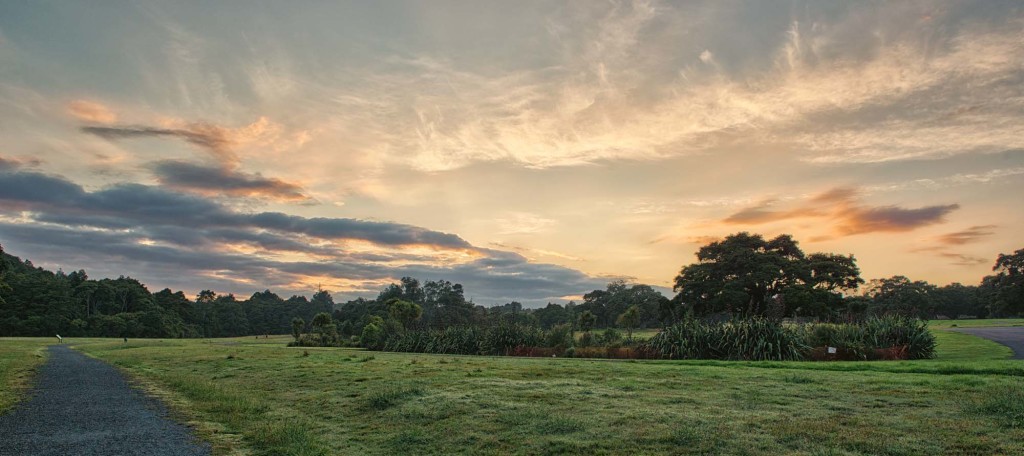
I suppose I’ve always liked looking at clouds, especially at different times of day. This morning as the sun was rising there were some rather lovely oranges and pinks. The first shot is at the Everglade Drive end of the Botanic Gardens here in Auckland. Interesting shot as to rely on the camera sensor would probably result in an overexposed sky and little detail in the grass and bush around the lake in the centre of the image. Exposing just for the sky would probably result in loss of detail in the shadows. Using Liveview and the histogram can really help here, but so can use of Ansel Adams’ Zone System.
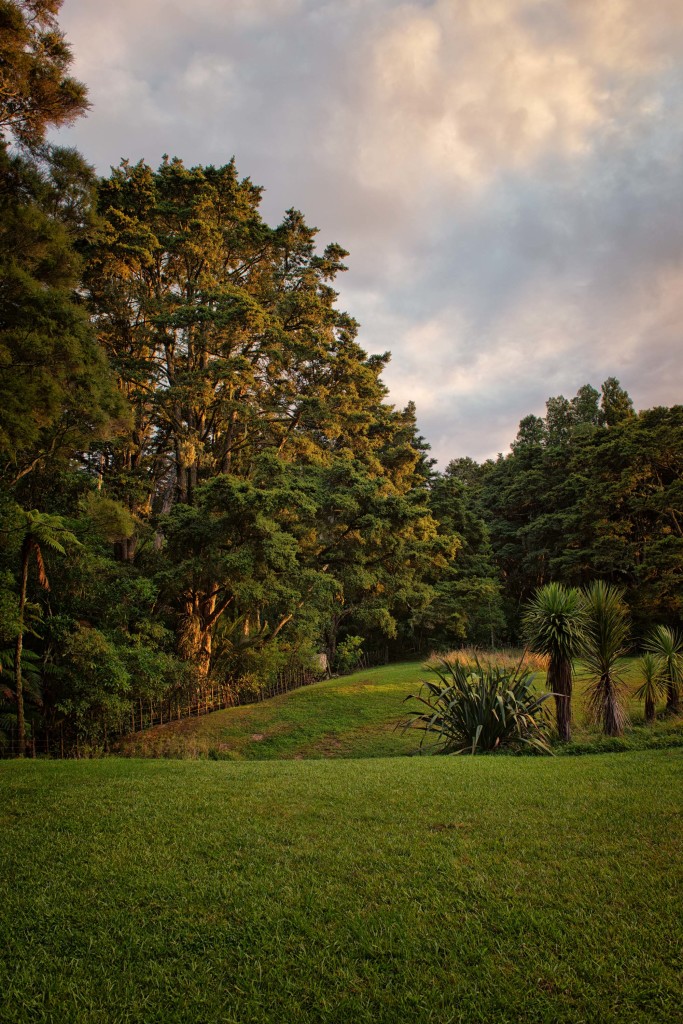
Sunrise on Totara Trees
Ansel Adams’ Zone System divides “exposures” into eleven “values” numbered from 0 through to X. Zone V (the middle value) is the average or close to an exposure for an 18% grey card. Values at the extremes (0 and X) are either black or white with no discernable texture. As such, I through IX are the extremes we really want to deal with. These would allow for slight detail retention at the extremes. Each zone is separated from its adjacent zone by one stop. So, carefully looking at a scene, you can decide on which zone each element in your frame falls and expose accordingly.
I’m just reading and experimenting and haven’t decided yet whether Liveview and histogram have replaced the zone system or if perhaps it compliments it. Remember, the Zone System was really created to ensure reliable and consistent creation of black and white negatives. We’re now working with colour and digital sensors.
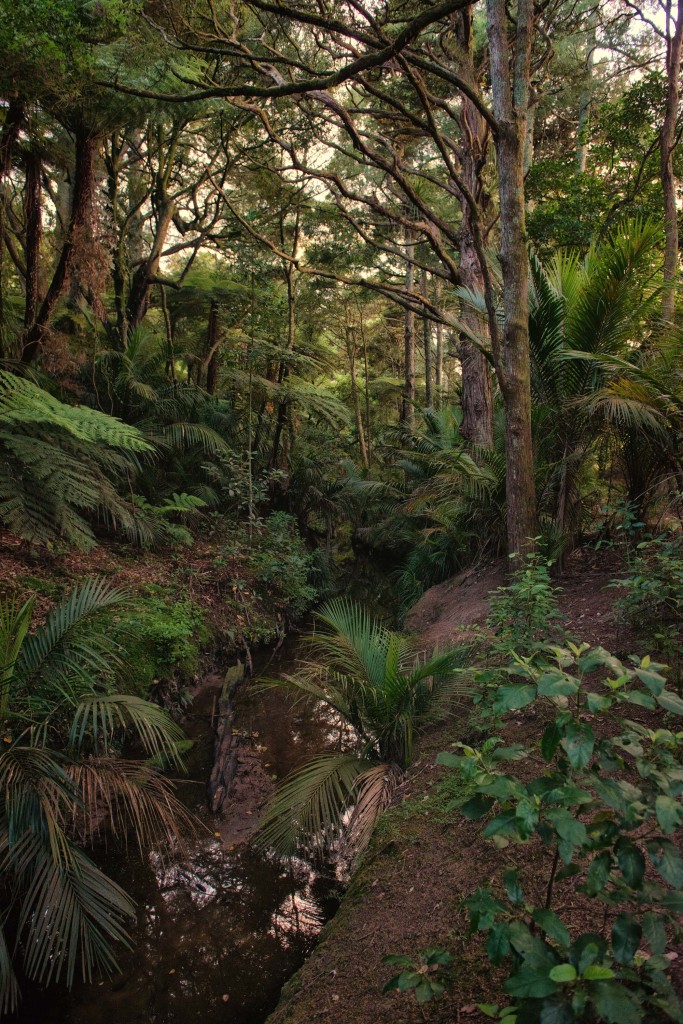
In a bit of bush at Totara Park
If nothing else, deciding on which zone each area in your frame falls slows you down and makes you examine the shot you’re about to take. I suppose this makes the whole process of taking a photograph more enjoyable … certainly much more so than point click and shoot! You may also feel more in control and feel that you took the photo rather than relied on the camera to work things out.
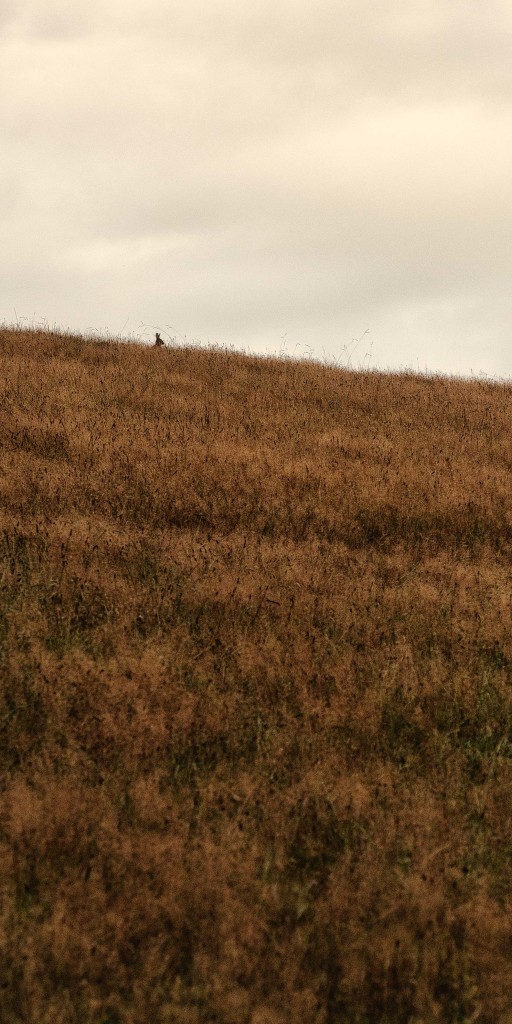
Whilst walking through the bush I noticed in a nearby field a large family of rabbits. Up near the ridgeline was one rabbit obviously acting as lookout. Very cute! Hopefully you can pick out the ears!
One of the lookouts keeping the tribe safe near Totara Park.
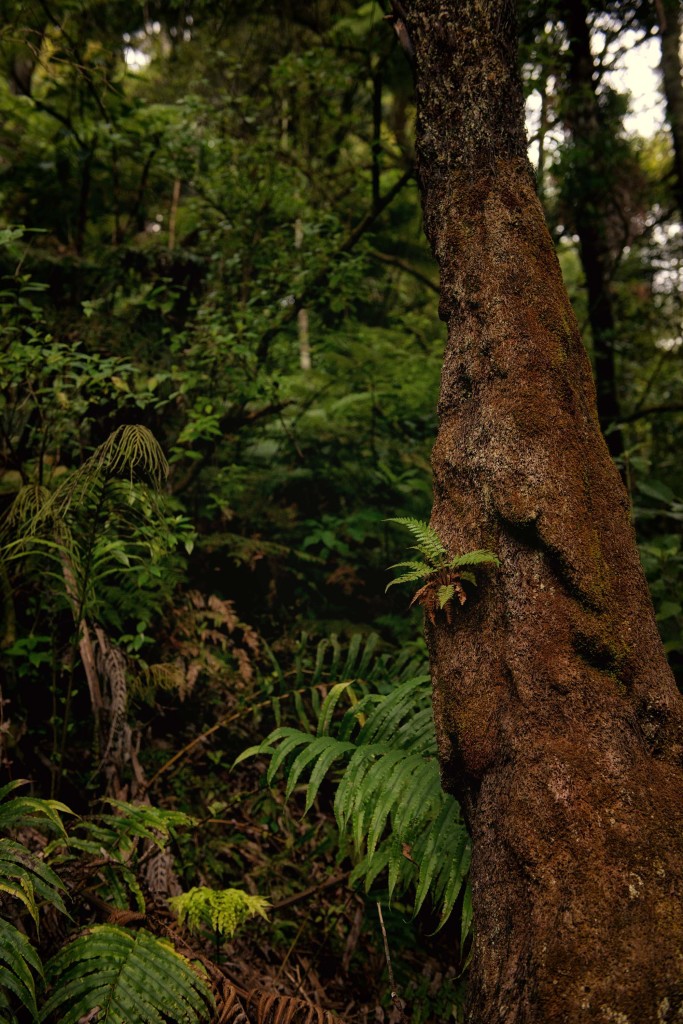
Last shot from this morning’s stroll is of a new bit of growth on an more aged tree fern trunk. I quite liked the richness of the colours in this image. Often the bush can look a little “grey”, but this scene looked lush and vibrant.
I’ll play a little more with Mr. Adams’ Zones and perhaps mention them in more detail in a subsequent post.
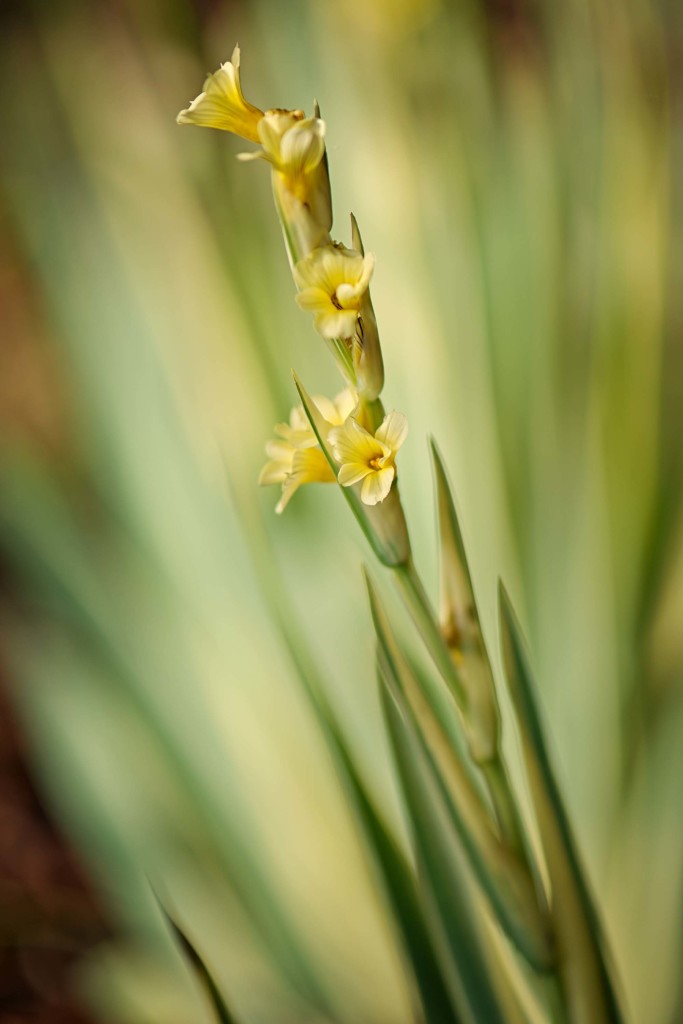
I’ve been busy reading all day and decided to take a break and head out into the garden. I was going to buy a few books, but thought I’d check them out first from the library. I seem to get the books, get embroiled in something more pressing then frantically read them before the return date. Anyway, the garden. We bought these plants a few months back and they ready are rather lovely. The leaves are those “sword shaped” affairs but then, from the centre of the leaves, you get these beautiful yellow flowers on stalks. Well, I like them anyway!
Sisyrinchium Striatum
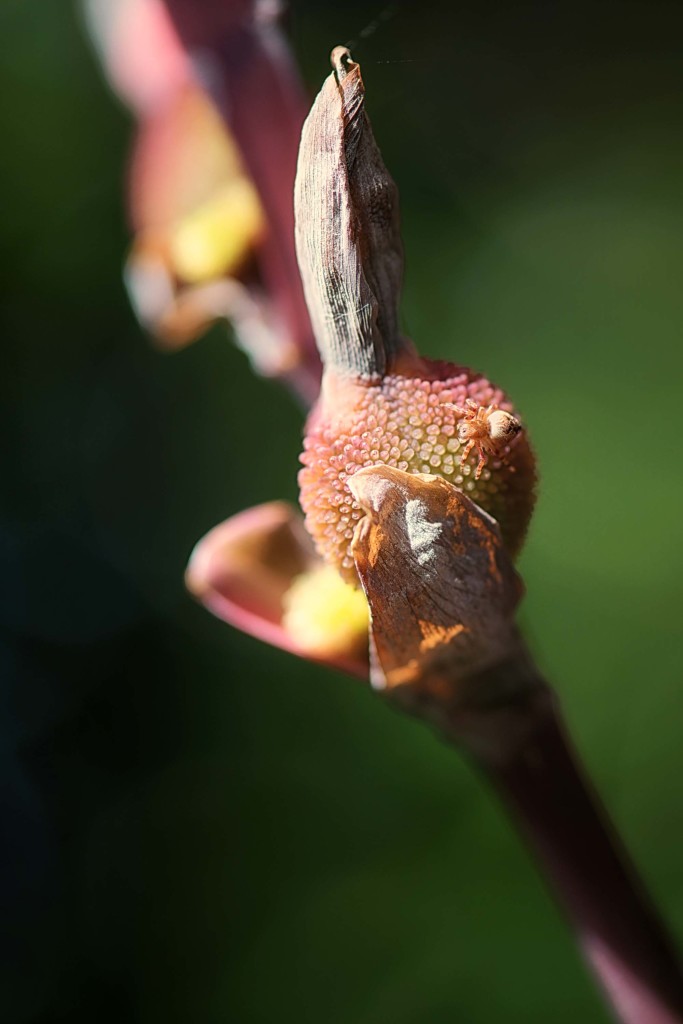
Whilst shooting these flowers I noticed the seed heads on the lilies close by. I think I like these seed head more than the flowers to be honest. Lining up the camera to take the shot I noticed something move. Not sitting still for long was a very busy spider crafting its web between these seed heads. Quite a pleasant time looking around the garden I think.
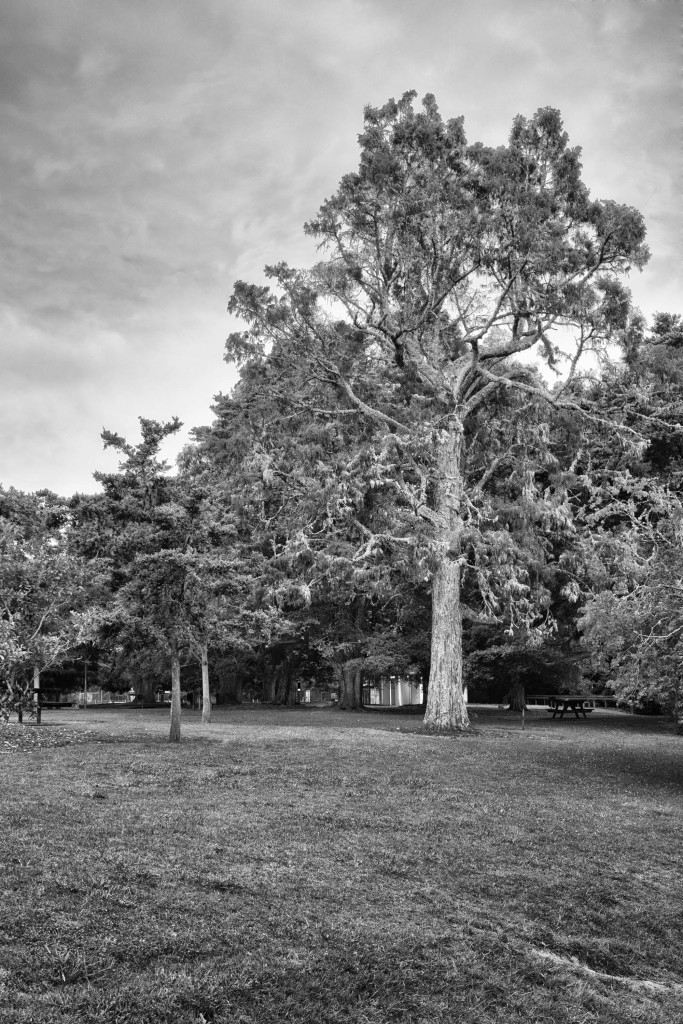
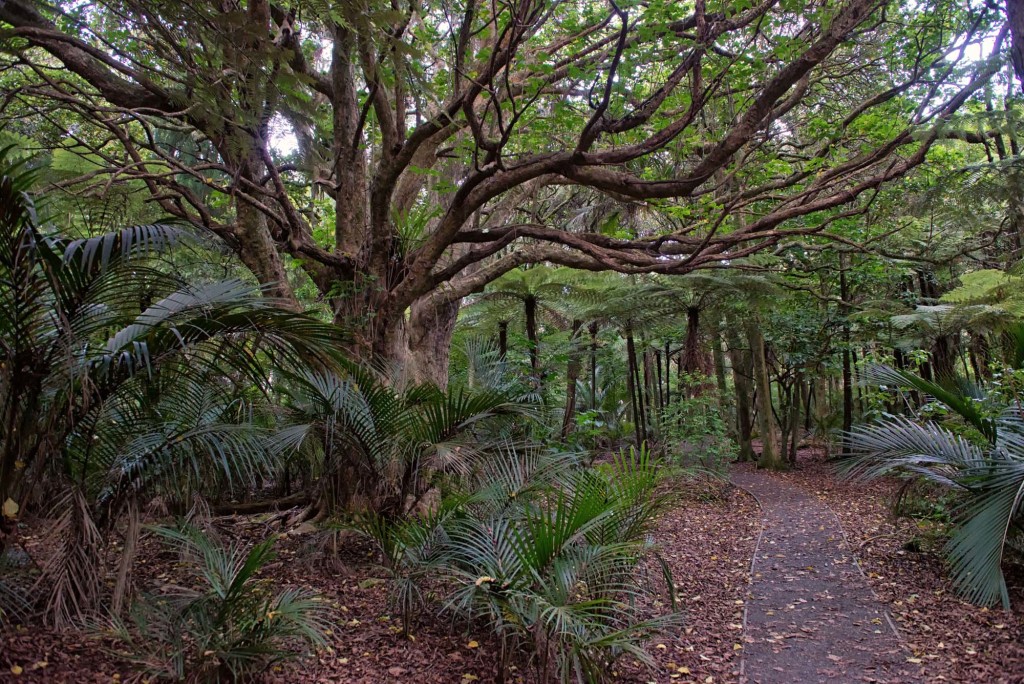
I was due to shoot a property early this morning further south from my home and the agreement was to check the weather first. Forecasts indicated rain, but you can never tell in Auckland. Looking out the window the sky looked amazing with some wonderful cloud shapes and colouration from the rising sun. I had to get to the park and see how the sky looked with the trees. Needless to say, by the time I got there the sky was a pretty uninspiring grey. The trees, however, looked magnificent. The first shot in this post is of a Totara quite close to the carpark at Totara Park. When I saw this tree I thought of a black and white image; great shape to the tree and the texture in the bark is so lovely. We’re very fortunate to have so many beautiful native trees here at Totara Park.
Lichen laden Totara Park tree.
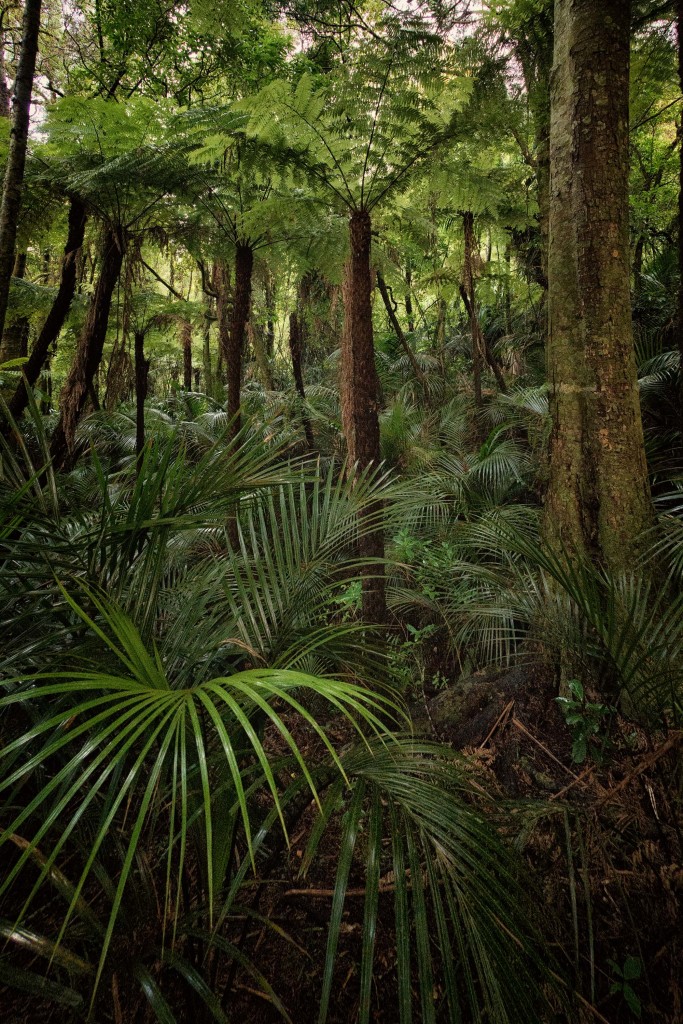
Stepping into the bushwalk the rain started. Besides getting me somewhat damp it did have the effect of washing the foliage and providing a glisten to the palm fronds. So many shapes and textures here. Next time I’ll dress appropriately! Cameras were getting wet as was I, so I decided to head back home and contact the agent to check on the weather further south.
Rain washed palms and tree ferns
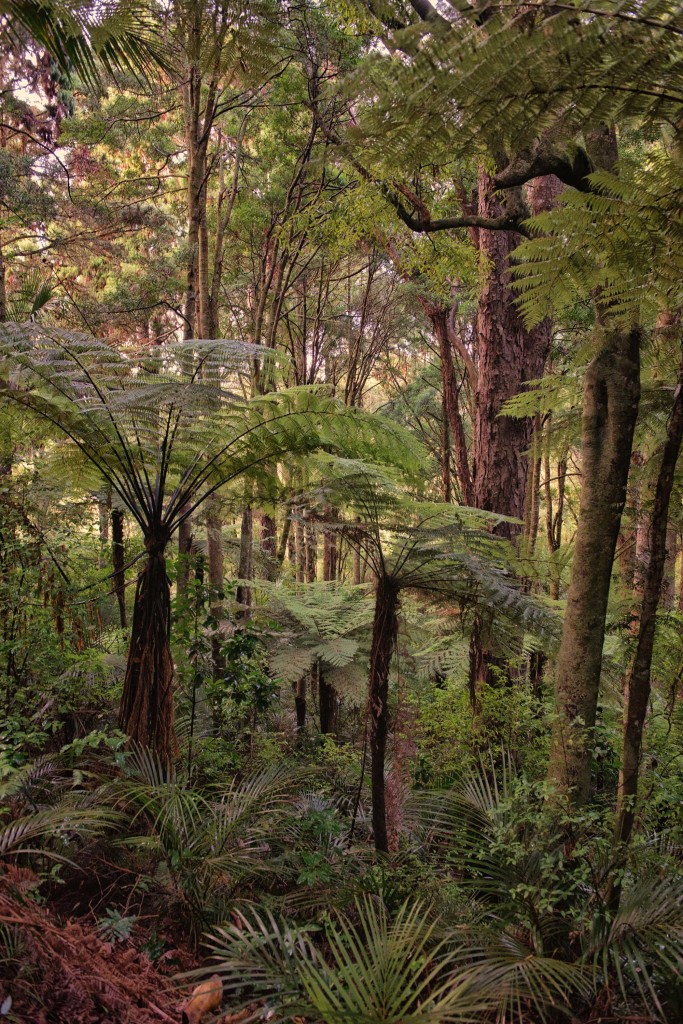
One more shot before I left. I liked the contrast between the bark on the tree and the soft fronds of the tree ferns alongside. This contrast needs more time to explore, but I was keen to get somewhere dry! Maybe tomorrow?
What a pleasant job today. Out shooting a property in Glenbrook that was the home to a flock of Alpacas. Mindful of Tintin’s experience of spitting alpacas (or were they llamas) I didn’t want to get too close! Just a few photos of these lovely creatures. Hopefully their expressions will make you smile.
One thing I learnt today was they go to the toilet in the same place each time. Is that right? Anyway, looking under the alpaca in the last image certainly suggests he’s been here before! Alpaca #3
Well, this morning was quite different to yesterday morning. Today was rather more overcast and the light intensity was much lower. A more diffused light, so I failed to capture what I was looking for. Yesterday the sun poked its rays through the tree canopy and illuminated small areas in a very special way. No such luck today! Even so, the bush remains a wonderful place to walk and look and listen.
The entrance to the bush walkway
The bush area I was walking through was in Totara Park and there’s some really lovely large specimens of native trees. The next photo shows a lovely Puriri tree. The branches seem to spread out for ages and the main trunk has such lovely texture and form. A bit of a favourite for the kereru for the berries. We didn’t see any kereru today, but we could hear them. It struck me that the next time I go into the bush I should record the sounds and play them as a background track to the blog post. If I can get up in time tomorrow I might just try that.
A rather splendid Puriri tree
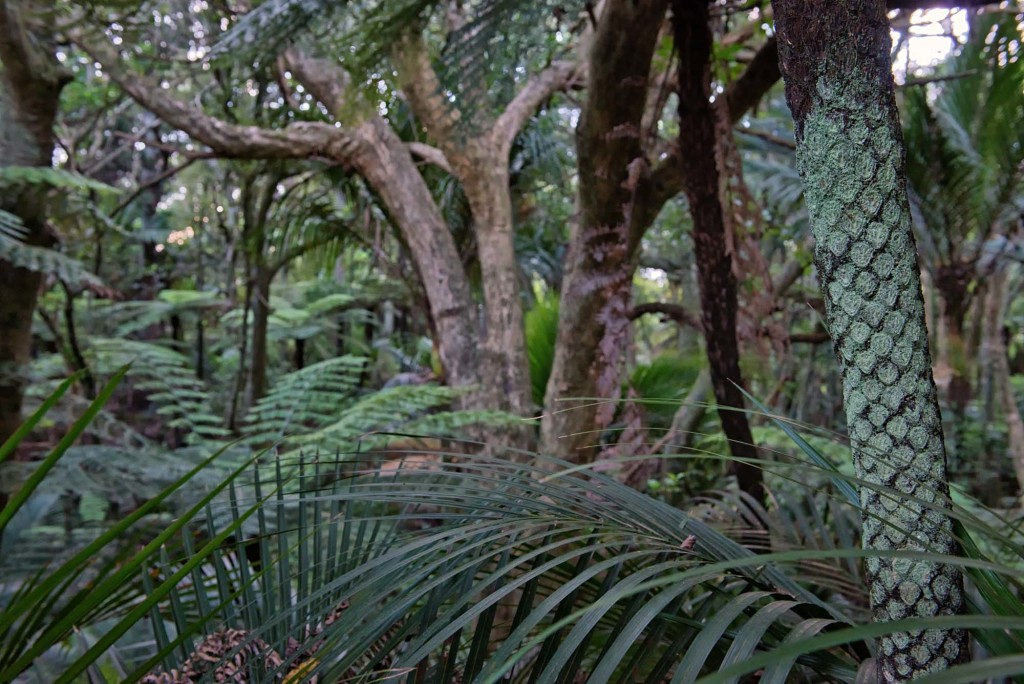
I’ve always been fond of the tree ferns, not just their huge fronds as you can see in the final photo of this post, but the patterns in their trunk. This next image shows the trunk of a tree fern with the textures accentuated by moss and lichen.
Lovely patterns on the trunk of a tree fern.
Final image for this post is looking up through the fronds towards and brightening sky. It was quite noisy standing here taking this shot. Not from sirens, vehicles, aircraft, loud music or people talking, but from the cicadas. And then the whoosh of a kereru flying above. Quite a special place and well worth getting out of bed to enjoy if you get the chance. So much better than sitting in a queue on the motorway!
Raindrops on a yucca leafToday started off well. I thought it was going to be another hot and sunny day, but no. We had rain and thunder … and a respite from the heat. I’d been trying a few photos with varying exposures, seeing what happened with long 30 second exposures as the wind blew the branches and leaves in the trees. I was curious to see the effect as some parts of the image would remain sharp and focussed as there was no movement. Other areas would have motion blur. Nothing to show I’m afraid … still experimenting!
What was interesting, however, was how the rain sat upon the leaves of the plants in the garden. The first image is of raindrops on a yucca leaf. Quite a shallow depth of field to ensure other leaves are nicely out of focus. Made me think of Itten and his contrasts. Here you can almost see rough and smooth, wet and dry, harsh/hard and soft.
The second image intrigues me as it looked less like a raindrop on a leaf and more like a creature with a beady eye! I really must try some of those shots where you use the raindrop as a lens. Raindrop that reminded me of an eye.
It was during a stroll out at Conifer Grove that we decided on an early start this morning. The plan to walk through Totara Park and enjoy the sun rising whilst in amongst the trees. I have to admit that the hills seem much longer and steeper since I was here last! Obviously more exercise is required. Early morning sunlight in Totara Park, Auckland, New Zealand
It was most pleasant! Peaceful, cool and most enjoyable. Needless to say, I think I’ll try to have less of a snooze in the morning and more of a walk.
Fancying a walk with daughter and wife it was decided to head out to the sea. Shame we didn’t check the tide times as the tide was out when we arrived. Never mind.
I’d been looking at some books by Bruce Barnbaum and was keen to try some black and white images again for a change. As many of you may already know, I spend a significant amount of my time behind the camera shooting properties for real estate agents in and around Auckland. These images are alwatys in colour, so to go back to black and white was a bit of a treat. I’m always congnisant of Ansel Adams and his zones which often takes me longer to consider and plan for than the time I’m allowed on an evening stroll. Nevertheless I tried. I was particularly taken with the clouds and felt use of black and white might accentuate their structure more.
Conifer Grove in monochrome looking towards Wattle Downs.
I shot colour also, and there’s a couple more images below taken whilst on the walk. Ansel Adams encourages you to “see” in monochrome which is a lot easier with today’s digital cameras. I’d set my camera to save RAW images to one memory card, JPEGs to the other, and selected to shoot in monochrome. When using the LCD display I then see the image in black and white. Use of the histogram helps even more. By selecting to save in both RAW and JPEG I then get both a colour and black and white image. Remember the sensor in my camera (Nikon D800) is a colour sensor, so the RAW image will be in colour, the JPEG the monochrome version. This isn’t as good a black and white image as it could be as all that’s happening here is that the image is desaturated. How to get a good black and white image from a colour sensor is nicely explained by Vincent Versace in his From Oz To Kansas book.
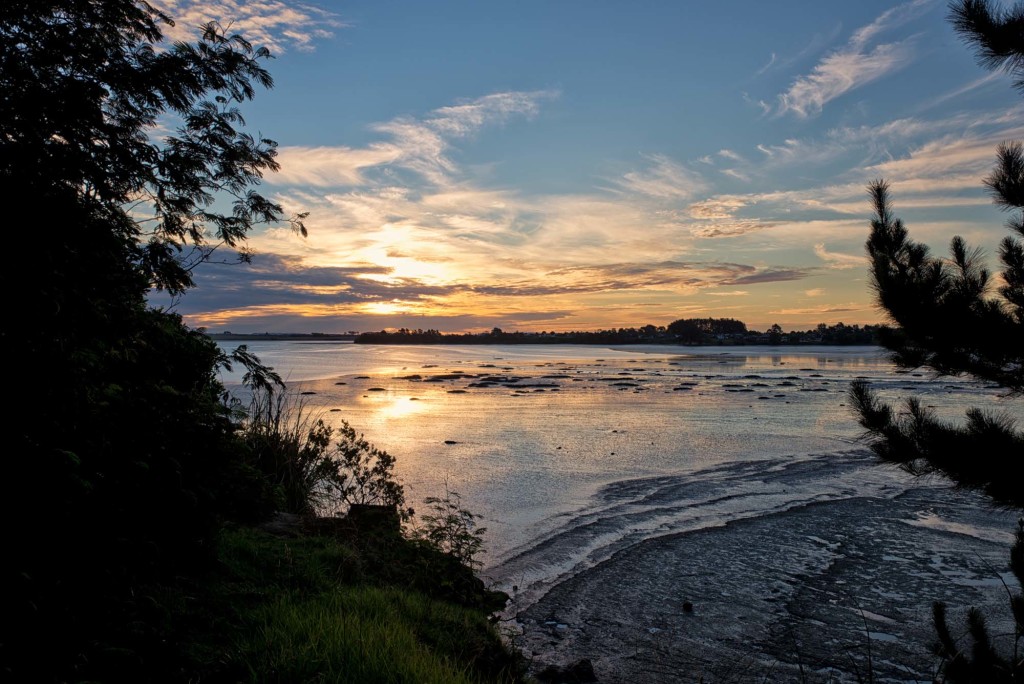
Looking out towards Wattle Downs from Conifer Grove. Shame the tide was out.
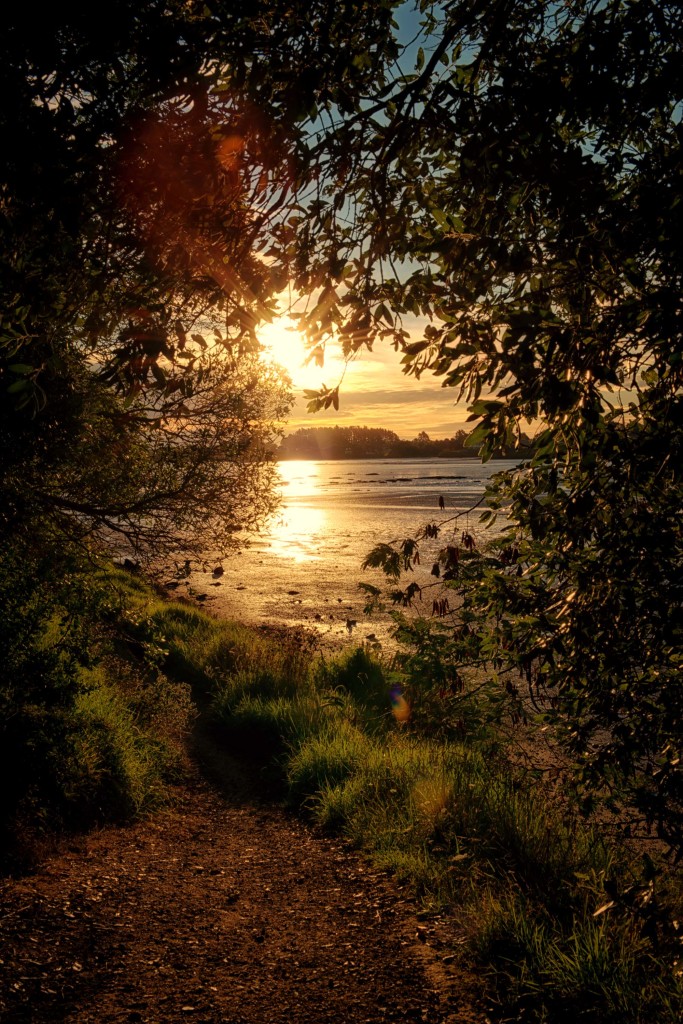
Vincent Versace has another book – the predecessor to “From Oz To Kansas” actually – entitled “Welcome To Oz” that gives more detail on the way he processes colour images. Versace has worked with the team at Nik Software (now part of Google) in the development of their ColorEfex software plugin for Lightroom and Photoshop. Playing with this product resulted in the last two images you see in today’s post. Shame about the flare in the last shot … or does that add to the mood?
Sunset over Wattle Downs #2Conifer Grove walkway leading to the sea. Shame the sea was out!
Fisheye view of the bush in Auckland Botanic Gardens We’d decided on a stroll and I wanted to take a camera … but not carry a lot of weight. I decided to take a fisheye lens and see if I could capture something interesting. With 180 degrees corner to corner this lens is pretty wide. Mind you, there’s a bit of distortion too. All the same, using the lens in portrait mode let me give an impression of height to these totara trees in the Botanic Gardens. To aid you with scale you’ll notice my wife pretty central in the image. This tends to be the way walks work when I have a camera with me. Wifey keeps walking, I stop and shoot, try to catch up and then, if something else catches my eye, stop, compose, shoot then run to catch up again. Maybe if I get her a camera too we could both take shots that were less rushed? Something to think about maybe 😉